
Portable solar has come a long way—but in many ways, it has also stood still.
Back in 2018, companies like Jackery introduced foldable solar panels that made it easier than ever to generate power on the go. Since then, we’ve seen improvements in efficiency, new form factors, and higher power outputs. Today, most manufacturers use advanced cell technologies like HPBC and TOPCon N-type, pushing efficiencies toward 25%.
But despite these advancements, one thing hasn’t changed:
Portable solar is still largely static.
The Limitation of Static Solar
Traditional portable panels rely on manual positioning. To get the most out of them, users need to:
- Reposition panels throughout the day
- Adjust tilt angles manually
- Constantly monitor sunlight conditions
In reality, this rarely happens consistently—resulting in lost energy and underutilized equipment.
A Different Approach: Intelligent Solar Tracking
We built the pSolBot platform around a simple idea:
What if portable solar could actively follow the sun?
Instead of relying on manual adjustments, pSolBot automatically tracks the sun’s movement throughout the day—capturing 30–40% more energy compared to static setups.
This isn’t just an incremental improvement—it’s a fundamental shift from passive to intelligent solar.
Expanding the System: Introducing pSolStand
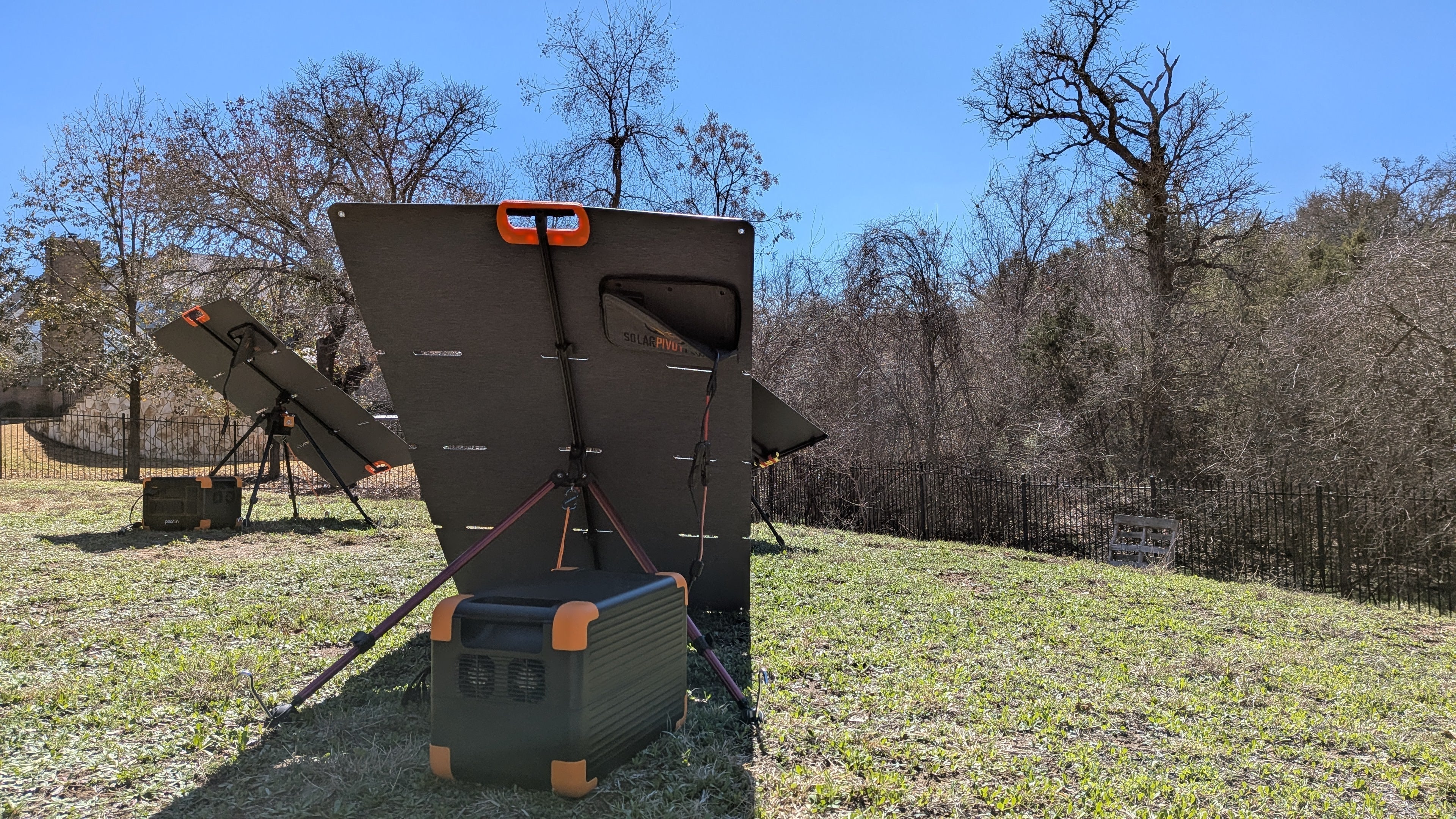
Building on this concept, we developed pSolStand—a fully mechanical solar stand designed for rapid deployment of larger solar arrays using lightweight, portable panels.
With pSolStand, users can:
- Quickly deploy higher-capacity solar setups
- Maintain optimal panel positioning
- Scale systems more efficiently in the field
This opens the door to use cases beyond camping and off-grid recreation—including mobile work sites, emergency response, and remote operations.
Next Generation: pSolBot R2
The latest evolution of our platform, pSolBot R2, incorporates extensive feedback from our first customers in the field.
Key improvements include:
- Enhanced reliability and performance
- Refined system design
- Doubled gearbox torque
Why Torque Matters
We’ve significantly increased the system’s torque to support larger and more capable solar configurations.
In testing, pSolBot R2 easily handles a 22 lb static load on the carriage—well beyond the weight of typical portable panels used today (most 160W–200W panels weigh under 10 lbs).
This added capacity ensures the system is ready for the next generation of higher-power portable solar panels.
What’s Next
We’re continuing to expand the ecosystem around intelligent portable solar.
Starting in June, we’ll begin shipping three new products, including:
- pSolBot R2 – Next-generation solar tracking platform
- pSolStand – Rapid-deploy mechanical solar stand
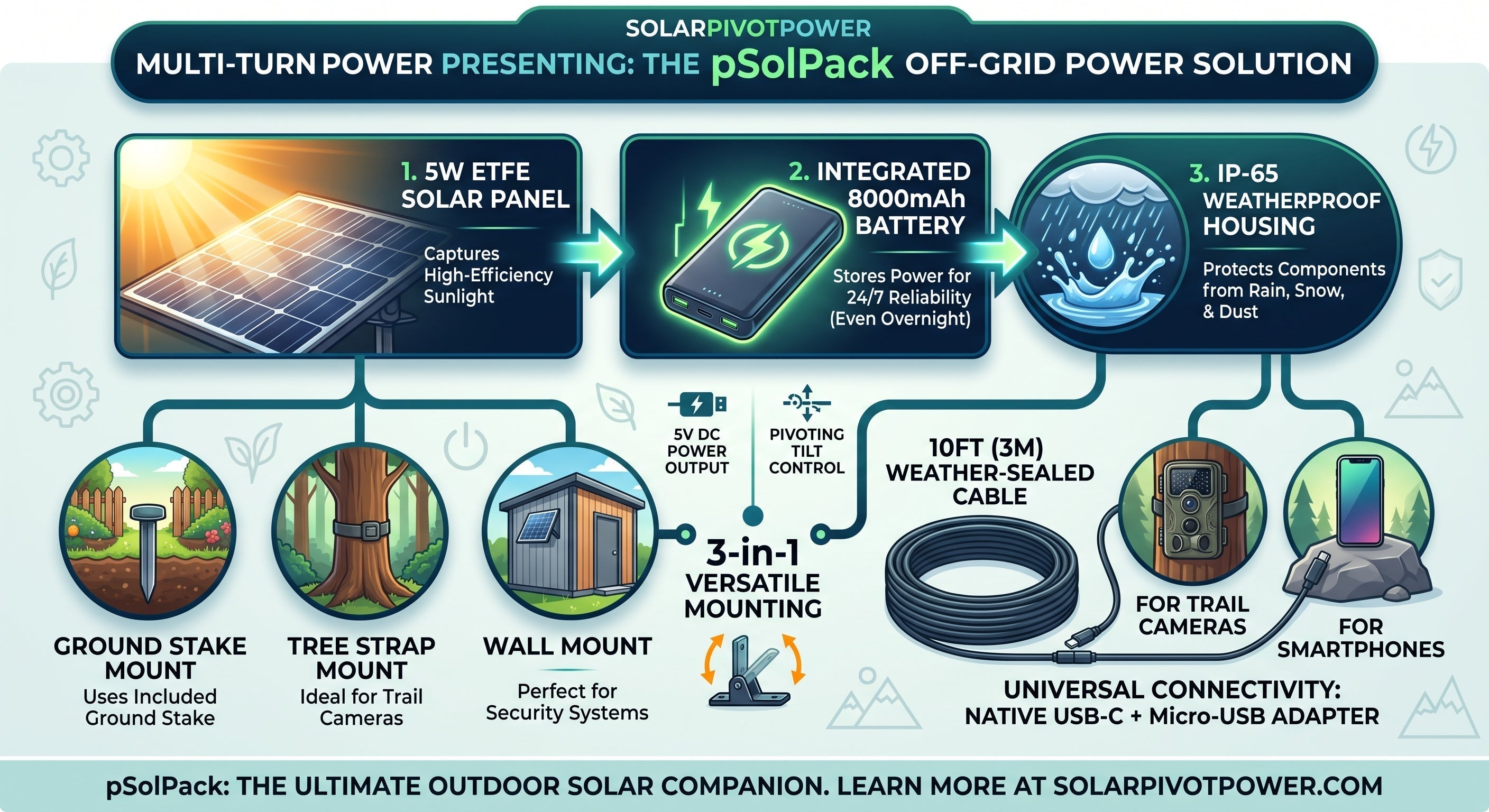
- pSolPack – Integrated solar + battery solution
Each product is designed to make solar power more efficient, more portable, and easier to use in real-world conditions.
Built With Our Customers
We’re incredibly grateful to our customers—not just for their support, but for the real-world insights and use cases they’ve shared.
Their feedback continues to shape how we design, build, and improve our systems.


اترك تعليقًا
This site is protected by hCaptcha and the hCaptcha Privacy Policy and Terms of Service apply.